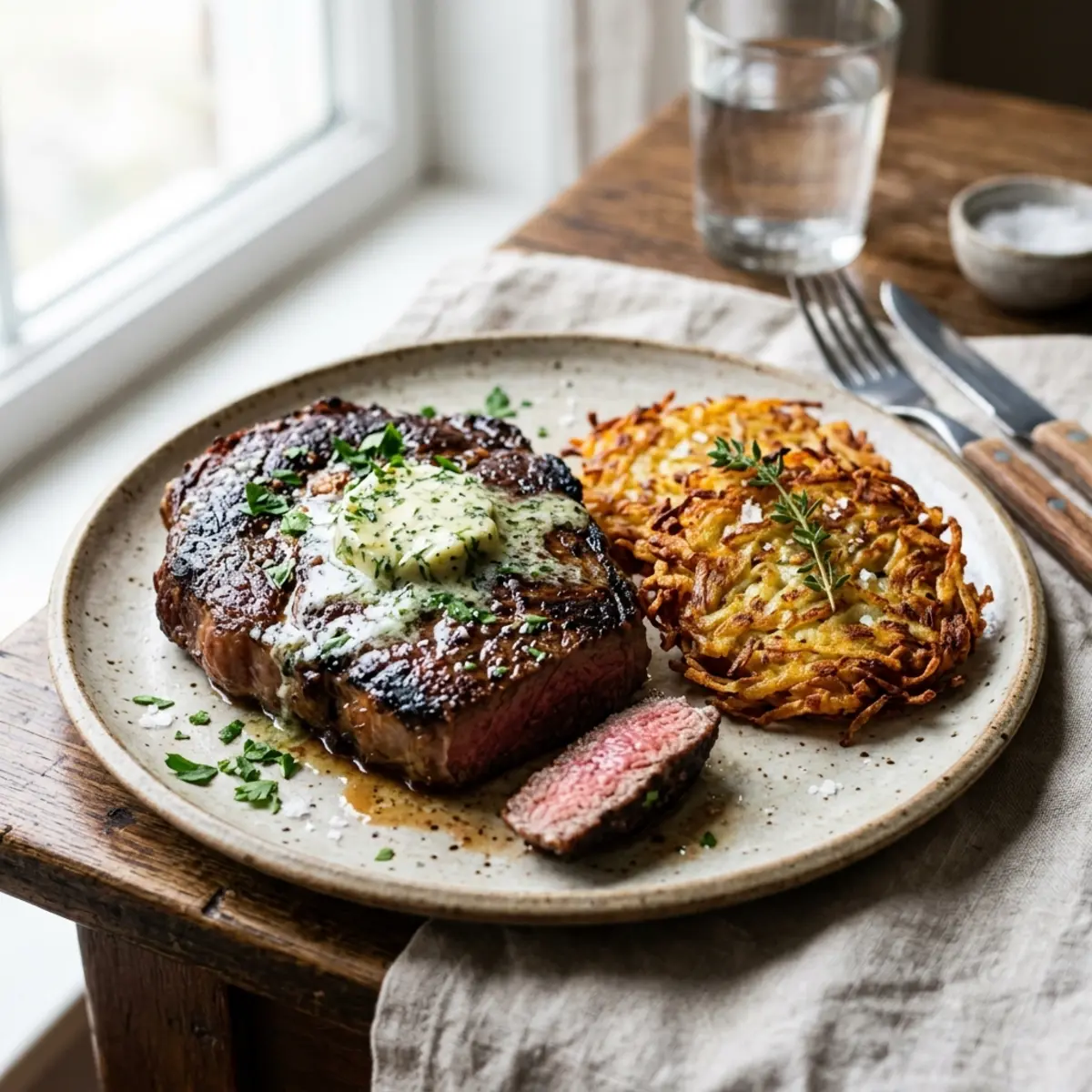
Air Fryer Ribeye Steak with Herb Butter and Potato Rösti
A succulent ribeye steak cooked in the air fryer, alongside a crispy potato rösti and roasted vegetables, topped with aromatic herb butter. Quick and full of flavor!
Steps
- 01
Season the ribeye with salt, pepper, and 1 tbsp olive oil. Let it rest at room temperature for 15 minutes.
- 02
Grate the pre-cooked potatoes and onion into a bowl. Add 1 tbsp softened butter, leaves from 2 thyme sprigs, salt, and pepper. Mix well and press into a flat rösti shape.
- 03
Cut the bell peppers, zucchini, and eggplant into bite-sized cubes. Toss with remaining olive oil, minced garlic, leaves from 1 thyme sprig, and rosemary needles. Season with salt and pepper.
- 04
Place the rösti and vegetable mixture in the air fryer basket or tray. Cook at 180°C (350°F) for 15 minutes.
- 05
After 15 minutes, push the vegetables to one side and place the ribeye in the air fryer. Add the cherry tomatoes. Cook for another 8-10 minutes for medium-rare, or to your liking.
- 06
Meanwhile, prepare the herb butter: finely chop leaves from 1 thyme sprig, 1 tarragon sprig, and 1 tbsp parsley. Mix with 75g (2.6 oz) softened butter. Season with salt and pepper.
- 07
Let the steak rest for 5 minutes before slicing. Serve with the rösti, roasted vegetables, and a generous dollop of herb butter on top.
Recipe story
Ribeye steak originates from American culinary tradition, cut from the rib section of the cow, known for its rich marbling. Rösti is a traditional Swiss dish, originating in the canton of Bern, where farmers cooked it for breakfast. Herb butter, known as 'beurre composé' in France, was popularized in classic French cuisine to enhance meat flavors. The combination of these elements in an air fryer recipe reflects the modern adaptation of classic cooking techniques.
Ingredient Secrets
Discover the culinary secrets and flavor history of key ingredients in this dish.
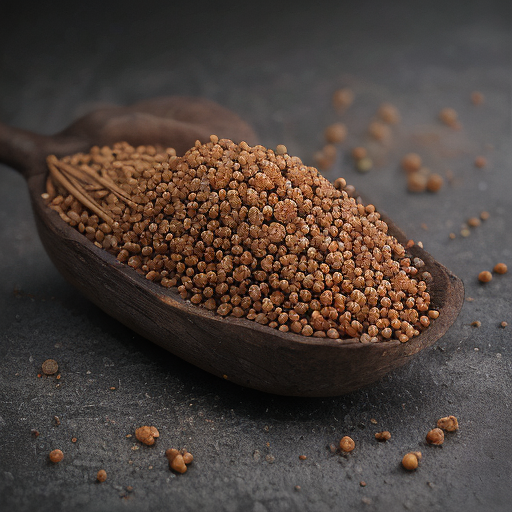
Black pepper
Known as 'black gold' in antiquity, pepper was so valuable that it served as currency and tribute. In the Middle Ages, Venetian merchants controlled the pepper trade, and individual peppercorns were often counted. Legend has it that when Alaric, king of the Visigoths, demanded tribute from Rome, he included 3,000 pounds of pepper.
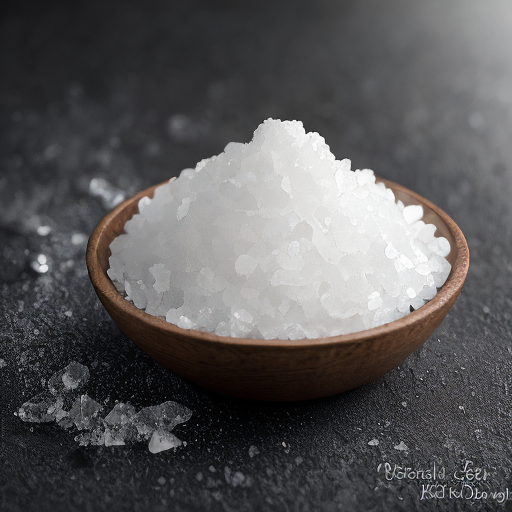
Sea salt
Sea salt, extracted from ocean waters by evaporation, was one of the most precious goods of antiquity, used both as food and as currency. In ancient Rome, soldiers were paid with salt, which is the origin of the word 'salary'. Salt roads connected entire civilizations, and in the Middle Ages, salt was so valuable it was called 'white gold'.
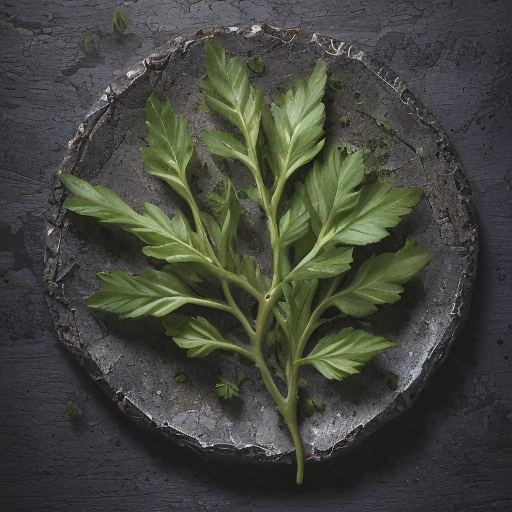
Thyme
In ancient Rome, thyme was burned in temples to purify the air and ward off evil spirits, and Roman soldiers added it to their baths to strengthen their courage. In the Middle Ages, noble ladies embroidered thyme on knights' scarves as a symbol of bravery. The ancient Greeks used it in baths and temples, and its name derives from the Greek 'thymos', meaning 'courage'.
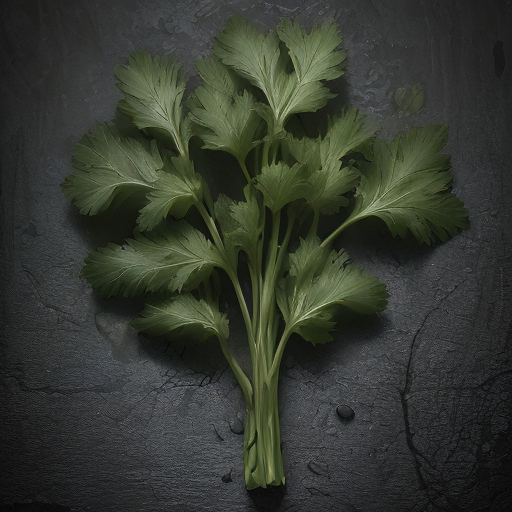
Parsley
In Greek mythology, parsley was associated with death and rebirth, planted on graves to symbolize the cycle of life. Romans used it generously in cooking and as a remedy for hangovers.
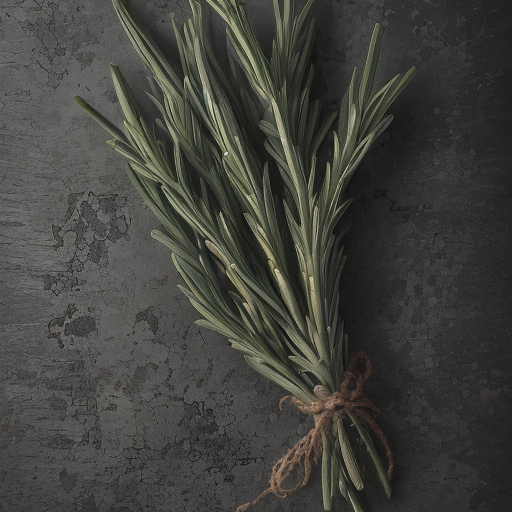
Rosemary
In ancient Rome, rosemary was a symbol of remembrance and fidelity, used in bridal crowns and funeral rites. Legend says that the goddess Venus, emerging from the sea waves, created rosemary.
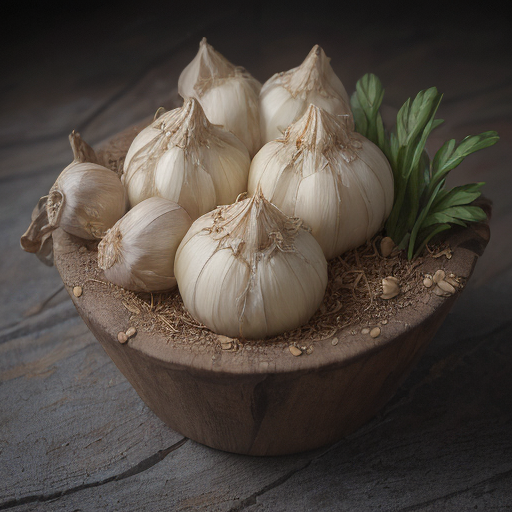
Garlic
Native to Central Asia, garlic was already known in ancient Egypt, where it was given to slaves to boost their strength. In ancient Greece, athletes consumed it before competitions, and in Rome, legionaries considered it essential for courage. During the Middle Ages, it was used to ward off vampires and the plague.
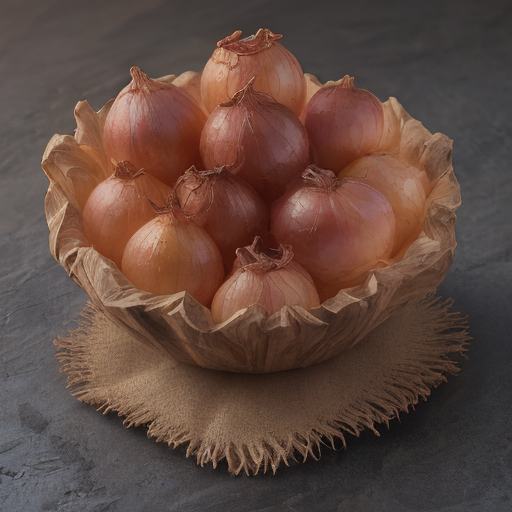
Onion
Probably originating in Central or West Asia, onions were cultivated in ancient Egypt, where they were considered a symbol of eternity and placed in tombs. In ancient Greece, athletes ate them to balance their blood, and in Rome, they were a staple food for soldiers. During the Middle Ages, onions were believed to protect against arrows and the plague.
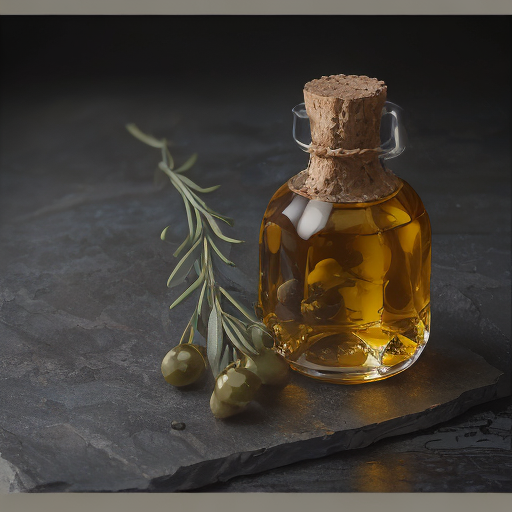
Olive oil
Originating in the Mediterranean basin, olive oil was already produced in ancient Crete 5,000 years ago. In ancient Greece, it was considered a gift from Athena and used in lamps, cosmetics, and religious ceremonies. The Romans spread it throughout the empire, and in the Middle Ages, monasteries preserved the tradition of its production.
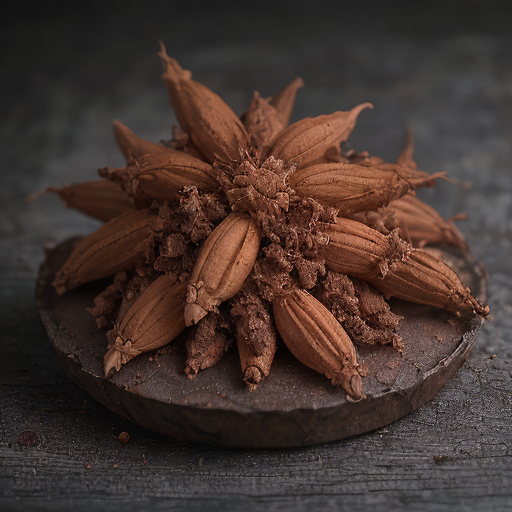
Cloves
Cloves, the dried buds of the exotic Syzygium aromaticum tree, were one of the most prized spices of the ancient world, often called 'aromatic gold'. In the Middle Ages, Venetian merchants controlled the clove trade, bringing them from the Maluku Islands, the only place they grew, and selling them at exorbitant prices in Europe.
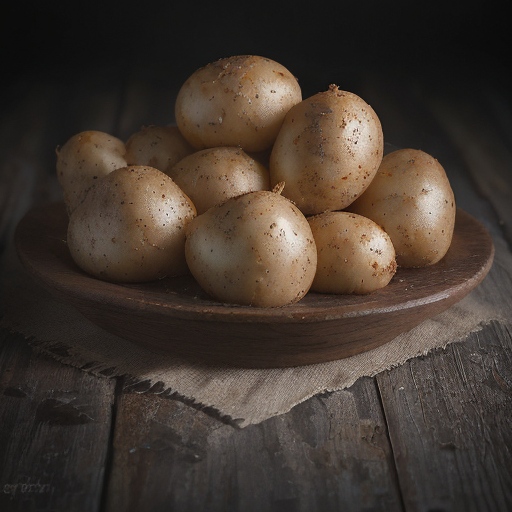
Potato
Although today it seems indispensable on the table, the potato was long viewed with suspicion in Europe. Arriving from the Andes in the 16th century, it was considered a diabolical plant, even poisonous, due to its toxic leaves and fruits. It wasn't until the 18th century, thanks to promoters like Antoine-Augustin Parmentier, that the potato became a staple food, saving Europe from famine.
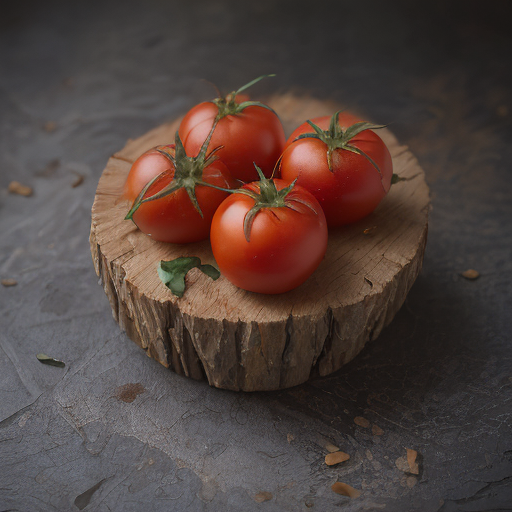
Tomato
Although today the tomato is indispensable in global cuisine, it was long viewed with suspicion in Europe, considered a toxic ornamental plant. It wasn't until the 19th century that Italian immigrants popularized it in the United States, turning it into an iconic ingredient of Mediterranean cuisine. Native to South America, the tomato was domesticated in Mexico and brought to Europe by Spanish conquistadors.
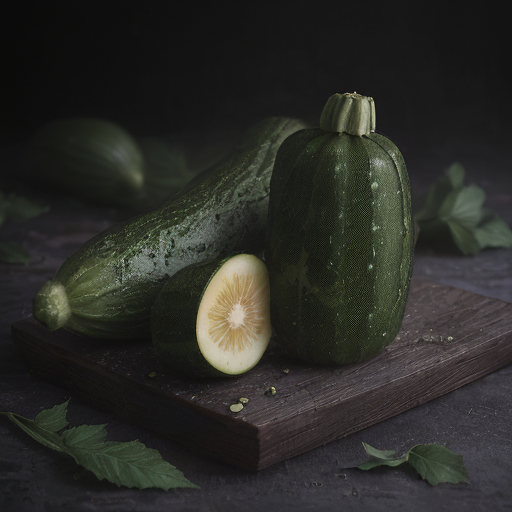
Zucchini
Although today we associate them with light summer cuisine, zucchini were first cultivated in ancient Mexico over 7,000 years ago. They were brought to Europe by Spanish explorers in the 16th century.

Eggplant
Although the name 'eggplant' suggests a connection to eggs, this purple vegetable actually originates from India, where it was cultivated over 4,000 years ago. Arabs introduced eggplants to Europe during the Middle Ages.
You may also like
 Breakfast
Air Fryer Grilled Cheese – Quick 7-Minute Recipe
 Breakfast
Frozen Waffles in Air Fryer – Quick and Crispy Breakfast
 Breakfast
Air Fryer Toast – Quick and Crispy Recipe
 Breakfast
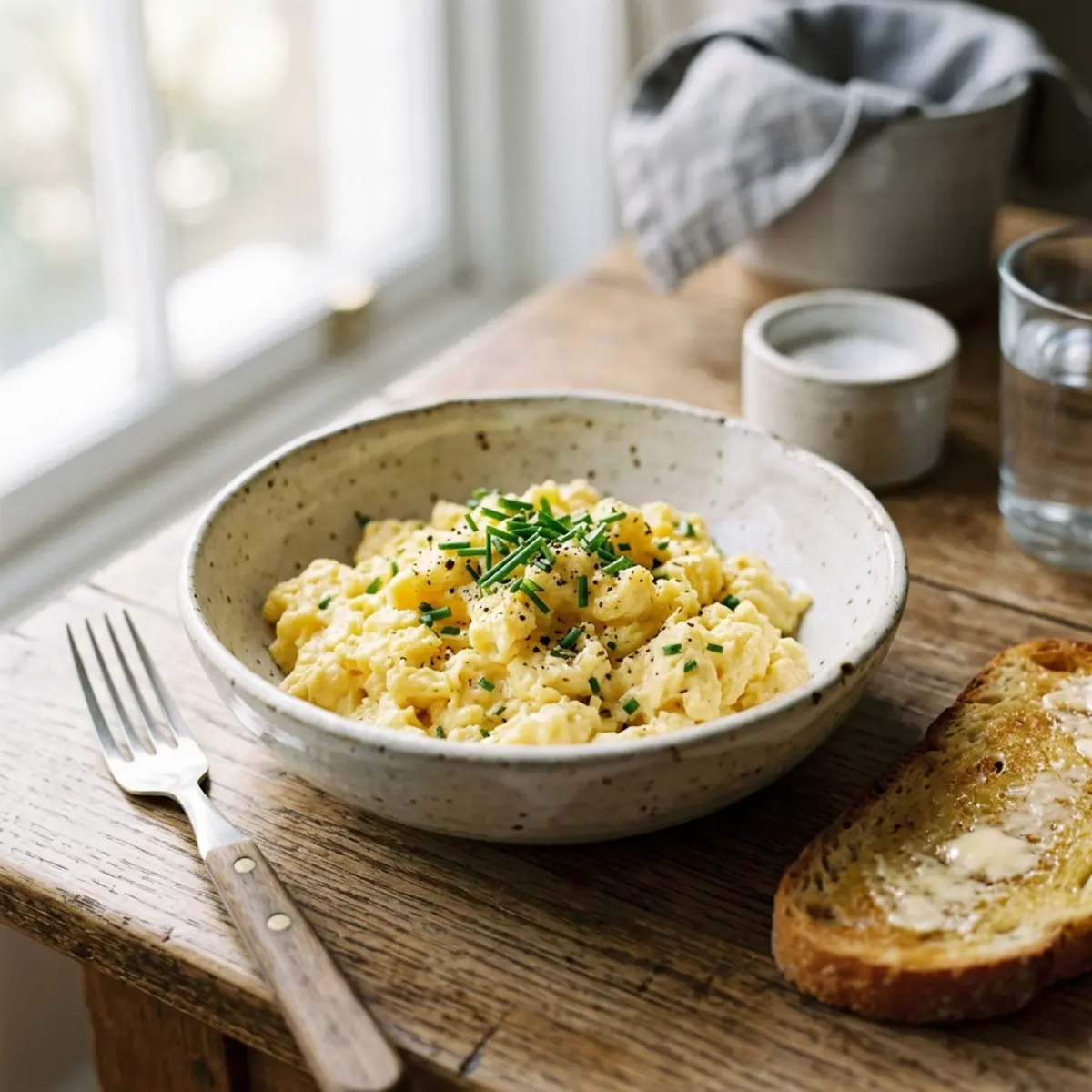
Fluffy Scrambled Eggs in Air Fryer – Quick Breakfast
 Breakfast
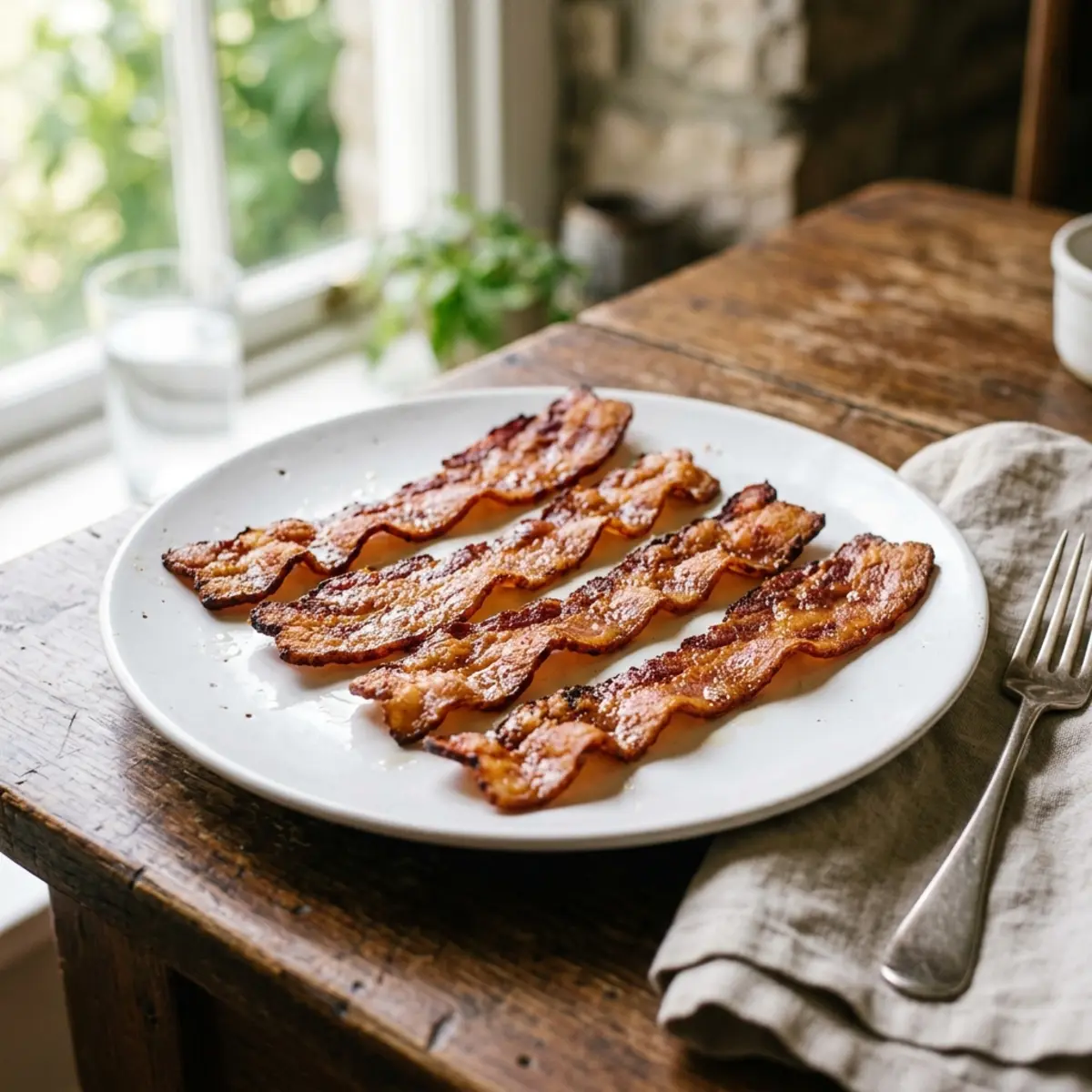
Crispy Air Fryer Bacon – Quick Recipe (10 min)
 Breakfast