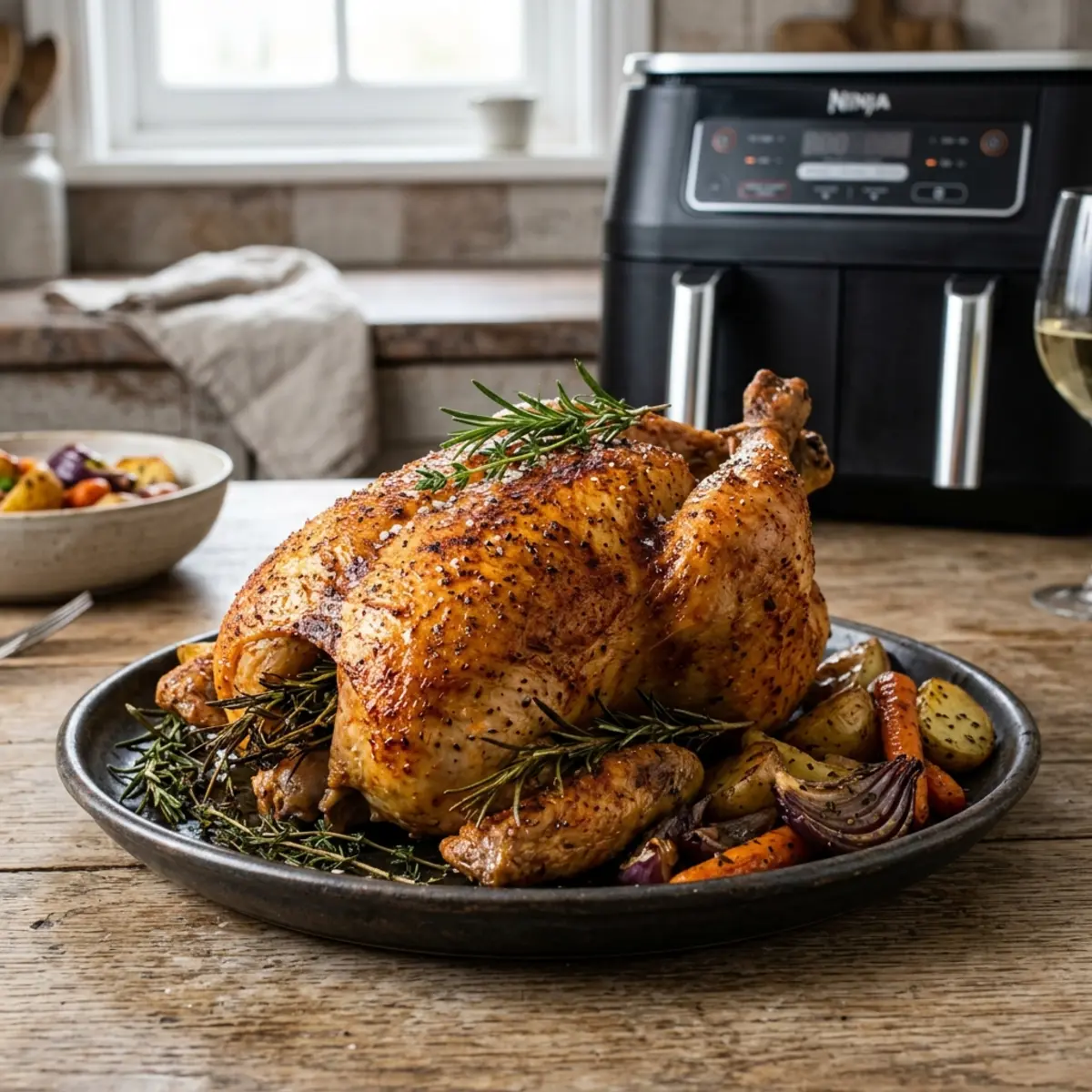
Whole Chicken in Air Fryer – Simple and Crispy Recipe
Steps
- 01
Choose a whole chicken (1.3-1.8 kg / 3-4 lbs) that fits in your air fryer basket.
- 02
Rinse the chicken under cold water and pat it dry with paper towels – dry skin is the secret to a crispy crust.
- 03
Mix salt, pepper, garlic powder, and paprika. Rub the mixture all over the chicken, including under the skin and inside the cavity.
- 04
Optional: Place the lemon half and a few sprigs of rosemary or thyme inside the cavity for extra flavor.
- 05
Preheat the air fryer to 180°C (350°F) for 5 minutes.
- 06
Lightly grease the air fryer basket with olive oil or cooking spray.
- 07
Place the chicken in the basket breast-side down. Cook for 60-90 minutes, depending on weight (about 20 minutes per 500 g / 1 lb).
- 08
Turn the chicken breast-side up halfway through for even browning.
- 09
Check the internal temperature with a meat thermometer: it should reach 74°C (165°F) in the thickest part of the thigh.
- 10
When done, remove the chicken and let it rest for 10-15 minutes before carving – this allows the juices to redistribute and keeps the meat tender.
- 11
Carve the chicken and serve with roasted vegetables or a fresh salad.
- 12
Store leftovers in the refrigerator for up to 4 days. Use them for sandwiches or salads.
Recipe story
The whole chicken in an air fryer is a modern twist on the traditional Sunday roast, which has its origins in rustic European cuisine. In France, rotisserie chicken was a celebratory dish, cooked in village wood-fired ovens. With the advent of the air fryer, this recipe was adapted to achieve the same crispy skin and juicy meat in a fraction of the time. Its popularity surged in the United States, where home cooks embraced this quick and healthy method.
Ingredient Secrets
Discover the culinary secrets and flavor history of key ingredients in this dish.
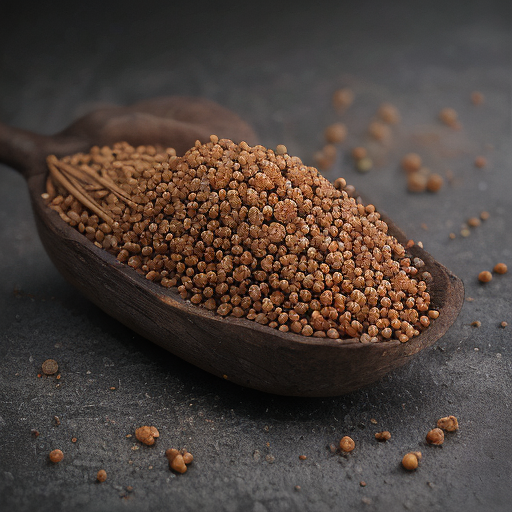
Black pepper
Known as 'black gold' in antiquity, pepper was so valuable that it served as currency and tribute. In the Middle Ages, Venetian merchants controlled the pepper trade, and individual peppercorns were often counted. Legend has it that when Alaric, king of the Visigoths, demanded tribute from Rome, he included 3,000 pounds of pepper.
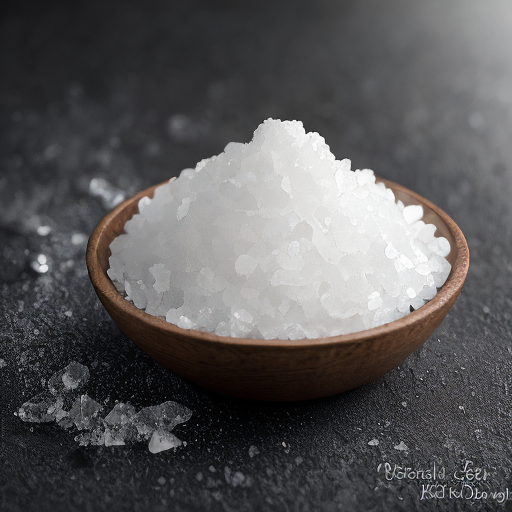
Sea salt
Sea salt, extracted from ocean waters by evaporation, was one of the most precious goods of antiquity, used both as food and as currency. In ancient Rome, soldiers were paid with salt, which is the origin of the word 'salary'. Salt roads connected entire civilizations, and in the Middle Ages, salt was so valuable it was called 'white gold'.
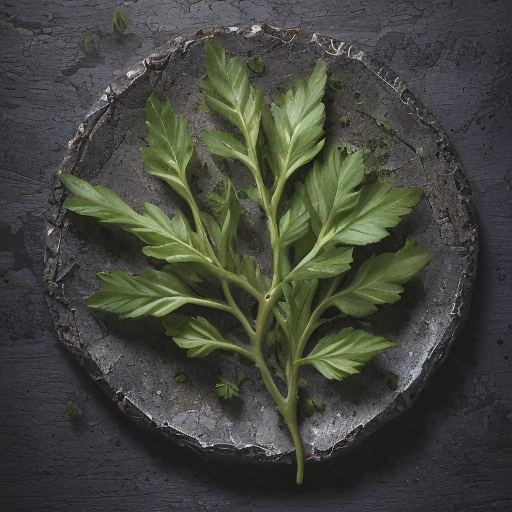
Thyme
In ancient Rome, thyme was burned in temples to purify the air and ward off evil spirits, and Roman soldiers added it to their baths to strengthen their courage. In the Middle Ages, noble ladies embroidered thyme on knights' scarves as a symbol of bravery. The ancient Greeks used it in baths and temples, and its name derives from the Greek 'thymos', meaning 'courage'.
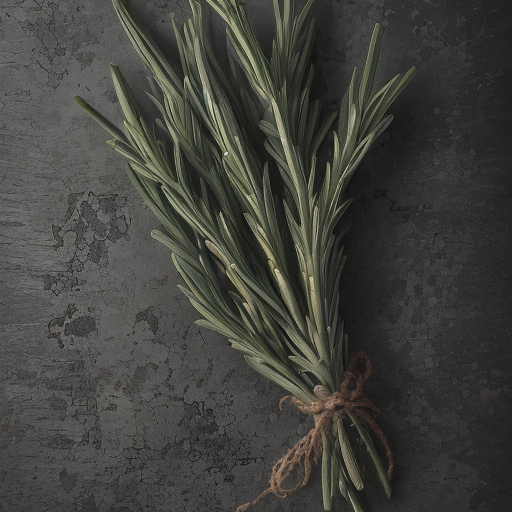
Rosemary
In ancient Rome, rosemary was a symbol of remembrance and fidelity, used in bridal crowns and funeral rites. Legend says that the goddess Venus, emerging from the sea waves, created rosemary.
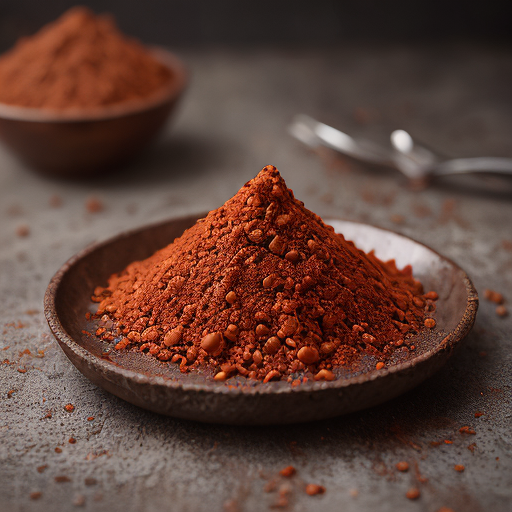
Paprika
Paprika, a emblematic spice brought to Europe by Christopher Columbus from the New World. Although associated with Hungarian cuisine, its origins are in Central America, where it was used by the Aztecs.
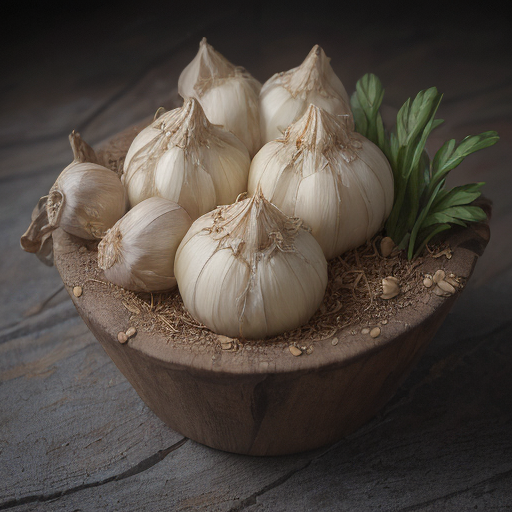
Garlic
Native to Central Asia, garlic was already known in ancient Egypt, where it was given to slaves to boost their strength. In ancient Greece, athletes consumed it before competitions, and in Rome, legionaries considered it essential for courage. During the Middle Ages, it was used to ward off vampires and the plague.
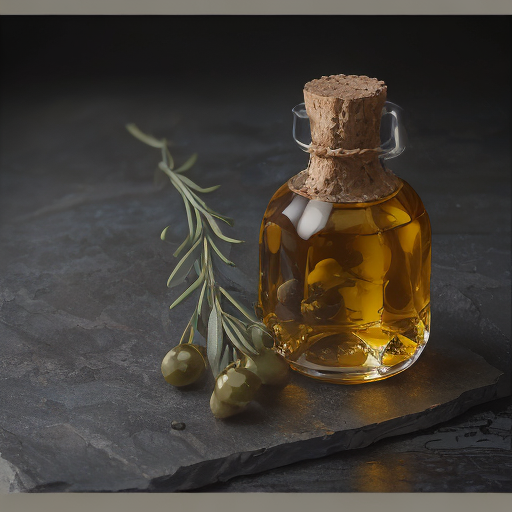
Olive oil
Originating in the Mediterranean basin, olive oil was already produced in ancient Crete 5,000 years ago. In ancient Greece, it was considered a gift from Athena and used in lamps, cosmetics, and religious ceremonies. The Romans spread it throughout the empire, and in the Middle Ages, monasteries preserved the tradition of its production.
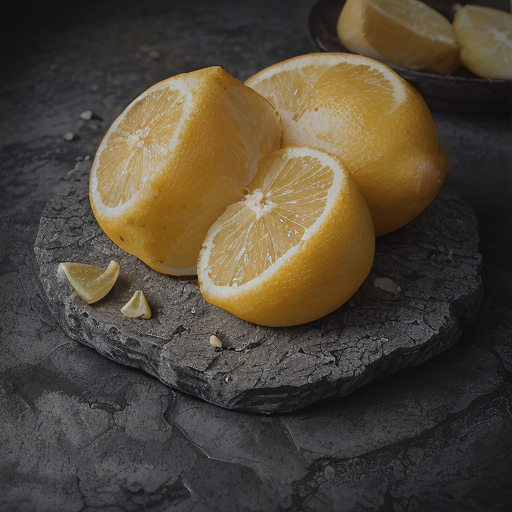
Lemon
The lemon is an ancient hybrid between citron and bitter orange, likely originating in northern India or China. In the Middle Ages, lemons were so valuable that they were given as gifts to kings. Fun fact: during the Gold Rush, British sailors were given lemons to prevent scurvy, leading to the nickname 'limey'.
You may also like
 Chicken
Air Fryer Caesar Salad with Chicken – Quick and Crispy Recipe
 Chicken
Crispy Air Fryer Chicken Breast
 Chicken
Air Fryer Chicken Breast – Quick 17-Minute Recipe
 Chicken
Crispy Orange Chicken in Air Fryer
 Chicken
Air Fryer Chicken Breast: Juicy and Buttery in 20 Minutes
 Chicken