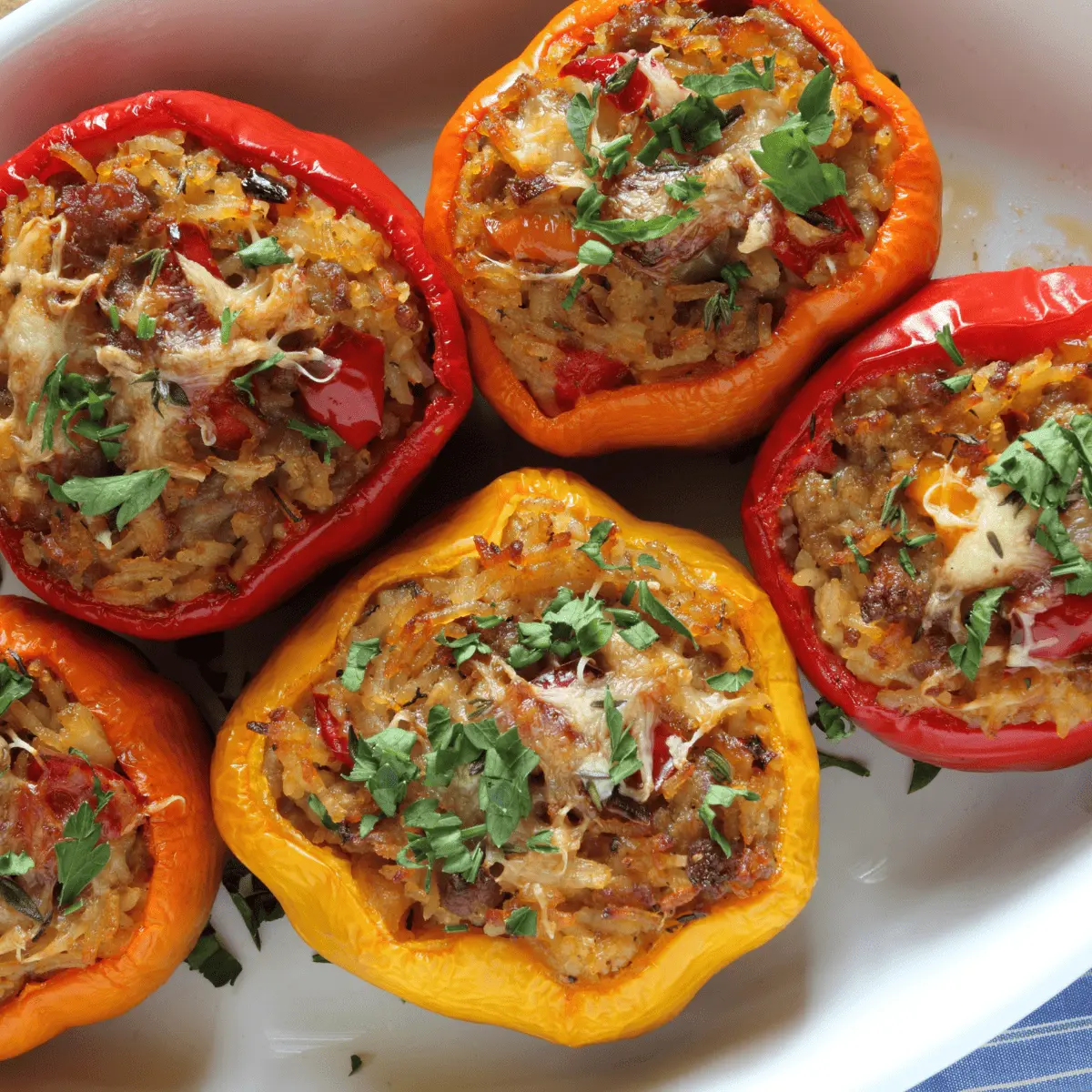
Picadillo Stuffed Peppers in Air Fryer – Quick and Flavorful Dinner
Steps
- 01
Wash the peppers, cut off the tops, and remove seeds and membranes. Choose ones with flat bottoms so they stand upright in the air fryer.
- 02
If using rice, cook it according to package instructions.
- 03
In a skillet over medium heat, cook the ground meat, breaking it up well. Add chopped onion and minced garlic; sauté until translucent.
- 04
Stir in cumin, cinnamon, salt, and pepper, then add diced tomatoes, tomato paste, sliced olives, and raisins. Mix well.
- 05
Pour in the broth and let simmer until the liquid reduces slightly. If using, fold in the cooked rice.
- 06
Stuff each pepper with the mixture, pressing gently. Do not overfill – leave a little space at the top.
- 07
Preheat the air fryer to 360°F (182°C) for 3-5 minutes.
- 08
Lightly brush the outside of the peppers with olive oil and place them upright in the air fryer basket, ensuring they do not touch each other.
- 09
Cook for 15-20 minutes, until the peppers are tender and lightly browned on the outside.
- 10
If adding cheese, sprinkle it on top during the last 3-4 minutes of cooking.
- 11
Let the peppers rest for 2-3 minutes before serving. Garnish with fresh parsley or cilantro if desired.
Recipe story
Picadillo is a traditional Cuban dish with Spanish roots, combining ground meat with raisins, olives, and almonds. In the 19th century, this mixture was adapted in various Latin American regions, becoming a staple. Stuffed peppers, on the other hand, are a widespread culinary technique from Mexico to the Middle East. The fusion of these two traditions creates an exotic and aromatic dish, perfect for a quick air fryer dinner.
Ingredient Secrets
Discover the culinary secrets and flavor history of key ingredients in this dish.
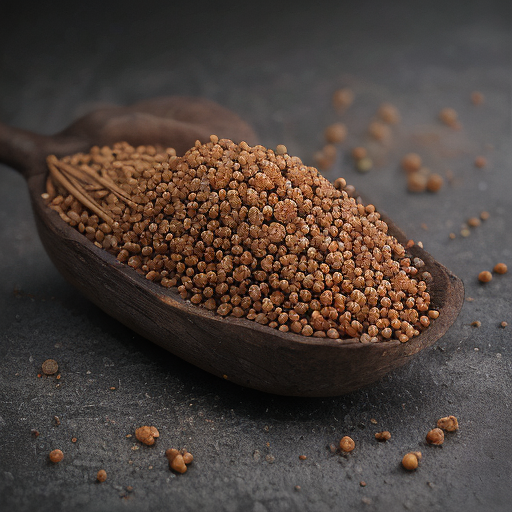
Black pepper
Known as 'black gold' in antiquity, pepper was so valuable that it served as currency and tribute. In the Middle Ages, Venetian merchants controlled the pepper trade, and individual peppercorns were often counted. Legend has it that when Alaric, king of the Visigoths, demanded tribute from Rome, he included 3,000 pounds of pepper.
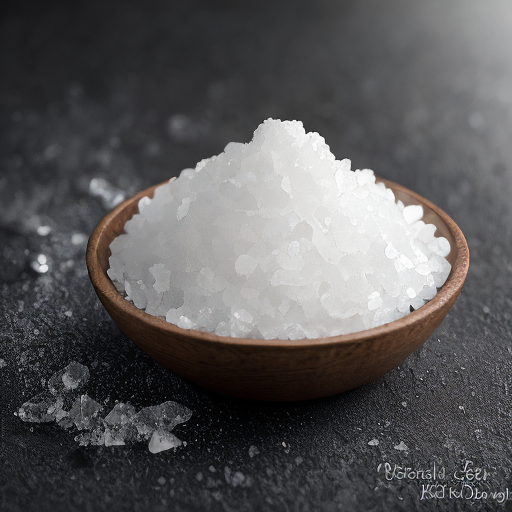
Sea salt
Sea salt, extracted from ocean waters by evaporation, was one of the most precious goods of antiquity, used both as food and as currency. In ancient Rome, soldiers were paid with salt, which is the origin of the word 'salary'. Salt roads connected entire civilizations, and in the Middle Ages, salt was so valuable it was called 'white gold'.
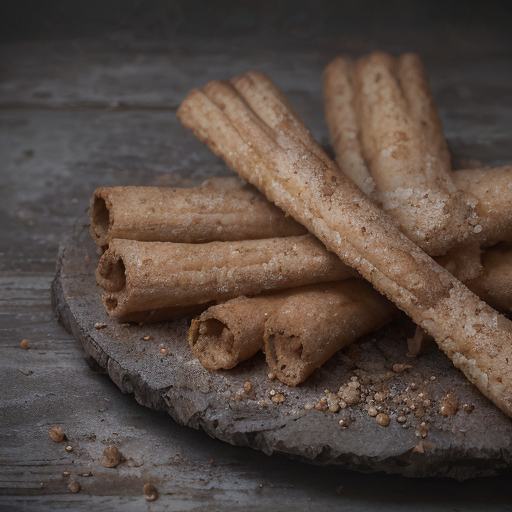
Cinnamon
In ancient Rome, cinnamon was more precious than gold, used in sacred rituals and royal perfumes. Legends told of fabulous birds called cinnamologus that built their nests from cinnamon sticks on inaccessible cliff tops. The cinnamon trade was long shrouded in mystery, with Arab merchants inventing fantastic stories to protect their sources.
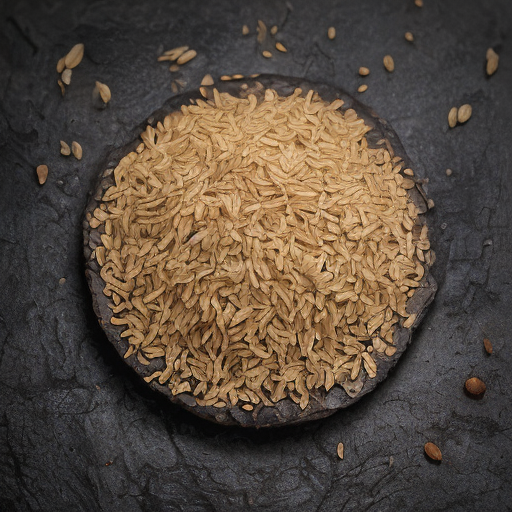
Cumin
Cumin, known since antiquity, was used by Egyptians for embalming and by Romans as a digestive. In the Middle Ages, it was believed to ward off evil spirits, and merchants transported it along the Silk Road from the East to Europe.
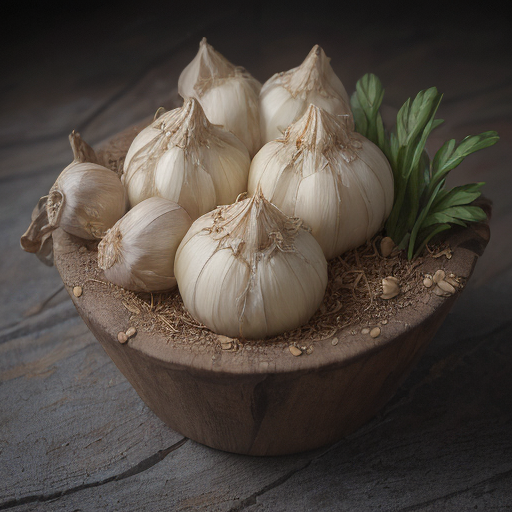
Garlic
Native to Central Asia, garlic was already known in ancient Egypt, where it was given to slaves to boost their strength. In ancient Greece, athletes consumed it before competitions, and in Rome, legionaries considered it essential for courage. During the Middle Ages, it was used to ward off vampires and the plague.
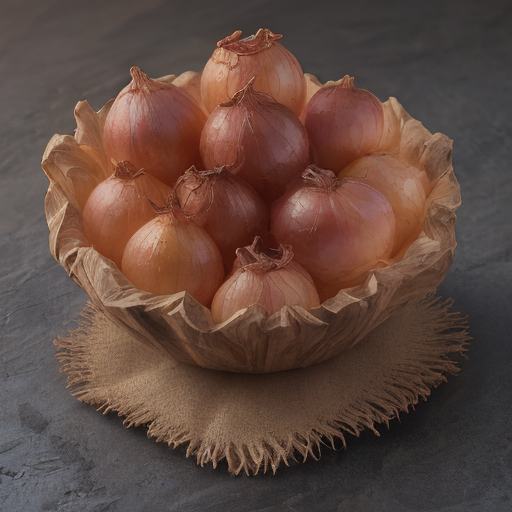
Onion
Probably originating in Central or West Asia, onions were cultivated in ancient Egypt, where they were considered a symbol of eternity and placed in tombs. In ancient Greece, athletes ate them to balance their blood, and in Rome, they were a staple food for soldiers. During the Middle Ages, onions were believed to protect against arrows and the plague.
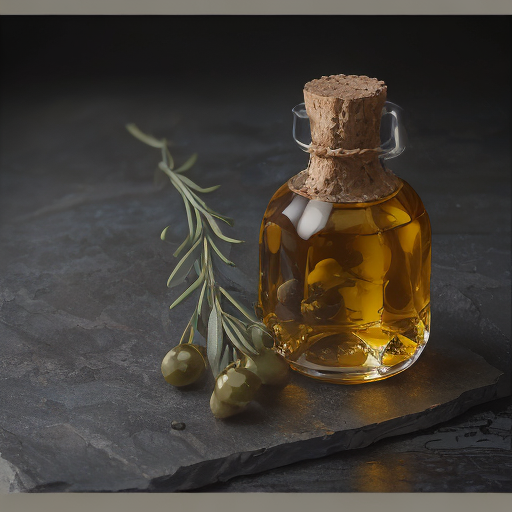
Olive oil
Originating in the Mediterranean basin, olive oil was already produced in ancient Crete 5,000 years ago. In ancient Greece, it was considered a gift from Athena and used in lamps, cosmetics, and religious ceremonies. The Romans spread it throughout the empire, and in the Middle Ages, monasteries preserved the tradition of its production.
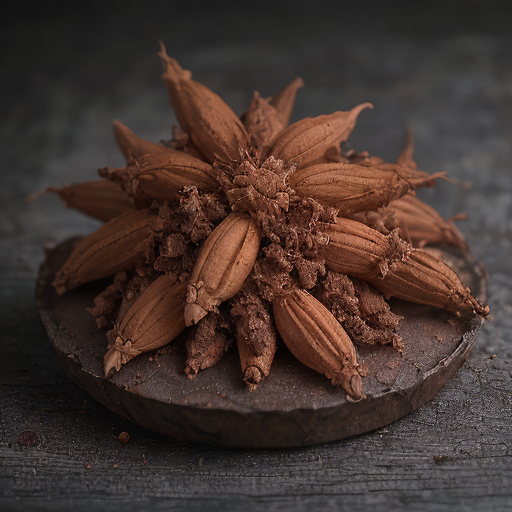
Cloves
Cloves, the dried buds of the exotic Syzygium aromaticum tree, were one of the most prized spices of the ancient world, often called 'aromatic gold'. In the Middle Ages, Venetian merchants controlled the clove trade, bringing them from the Maluku Islands, the only place they grew, and selling them at exorbitant prices in Europe.
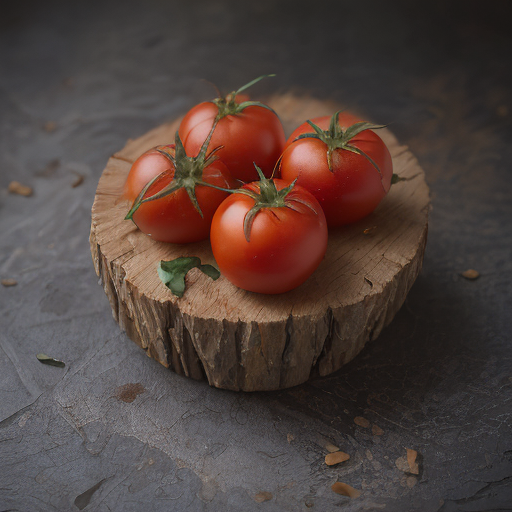
Tomato
Although today the tomato is indispensable in global cuisine, it was long viewed with suspicion in Europe, considered a toxic ornamental plant. It wasn't until the 19th century that Italian immigrants popularized it in the United States, turning it into an iconic ingredient of Mediterranean cuisine. Native to South America, the tomato was domesticated in Mexico and brought to Europe by Spanish conquistadors.
You may also like
 Misc
MiscAir Fryer S'mores – Quick Campfire Treat Without Fire
 Misc
MiscHow to Reheat Frikandellen in Air Fryer: Quick and Crispy Recipe
 Misc
MiscHow to Reheat Chicken in Air Fryer (Crispy and Juicy)
 Misc
MiscCrispy Reheated Chicken Pieces in Air Fryer
 Misc
MiscStuffed Bell Pepper with Mozzarella in Air Fryer
 Misc
Misc