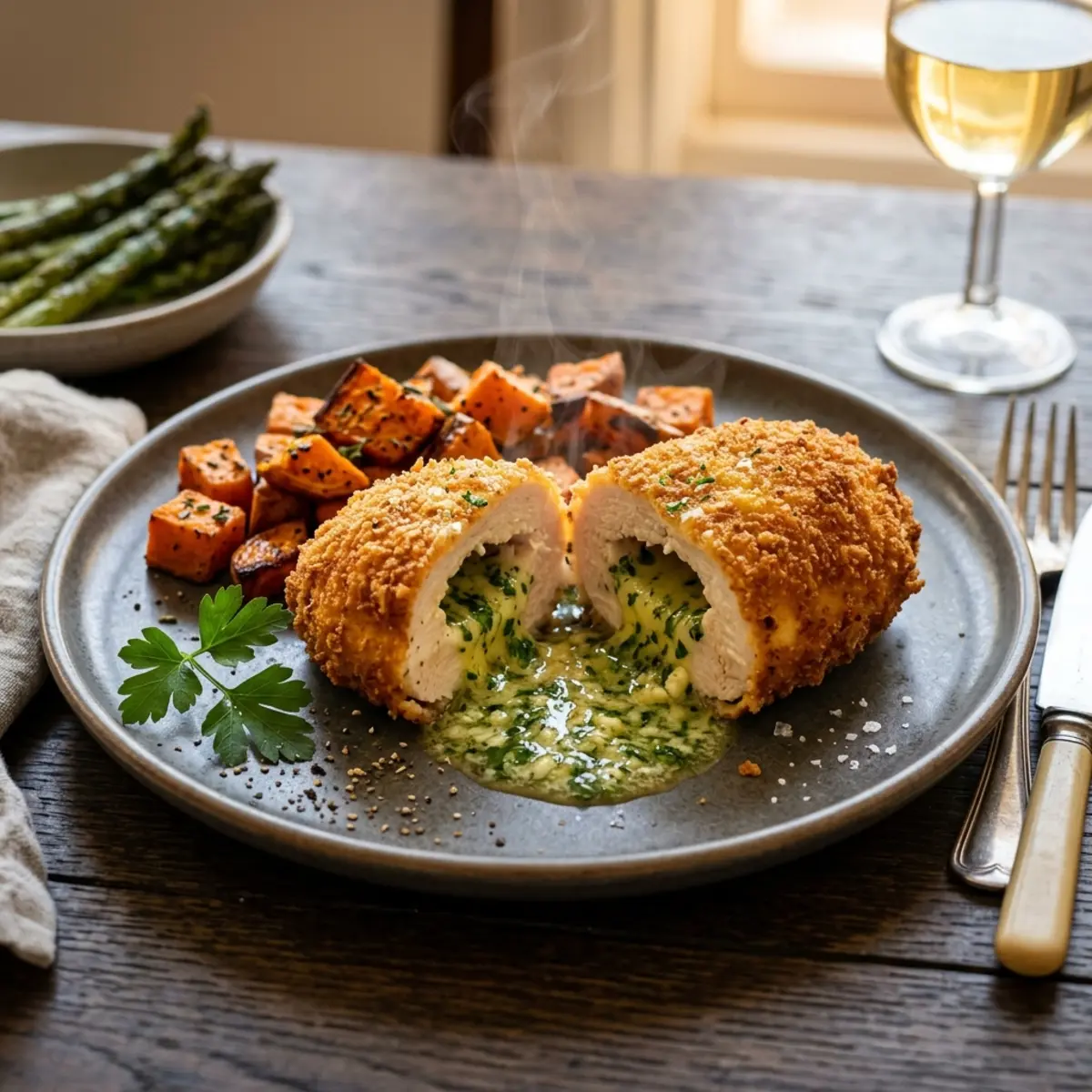
Air Fryer Chicken Kiev with Roasted Sweet Potato Cubes
A modern twist on classic Chicken Kiev, cooked quickly in an air fryer, served with roasted sweet potatoes.
Steps
- 01
Prepare garlic butter: mix softened butter with minced garlic, parsley, a pinch of salt and pepper. Shape into a small log and freeze for 5 minutes.
- 02
Cut a pocket in each chicken breast. Fill with garlic butter and seal well.
- 03
Bread the chicken: dredge in flour, then beaten egg, then breadcrumbs, pressing gently to adhere.
- 04
In a bowl, toss sweet potato cubes with olive oil, salt, and pepper until evenly coated.
- 05
Preheat air fryer to 180°C (350°F).
- 06
Place chicken pieces and sweet potato cubes in the air fryer basket in a single layer if possible.
- 07
Cook for 12–15 minutes at 180°C (350°F), turning halfway, until chicken is golden and cooked through (internal temperature reaches 74°C/165°F).
- 08
Serve hot, with a green salad if desired.
Recipe story
Chicken Kiev, also known as côtelette de volaille, originated in French cuisine and became popular in the 19th century. The recipe was adopted and adapted in many cultures, with the garlic butter version becoming a classic. Sweet potatoes, native to Central and South America, were introduced to Europe after the discovery of the New World.
Ingredient Secrets
Discover the culinary secrets and flavor history of key ingredients in this dish.
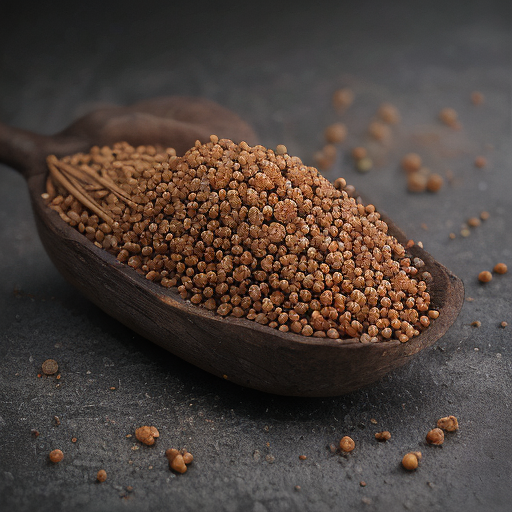
Black pepper
Known as 'black gold' in antiquity, pepper was so valuable that it served as currency and tribute. In the Middle Ages, Venetian merchants controlled the pepper trade, and individual peppercorns were often counted. Legend has it that when Alaric, king of the Visigoths, demanded tribute from Rome, he included 3,000 pounds of pepper.
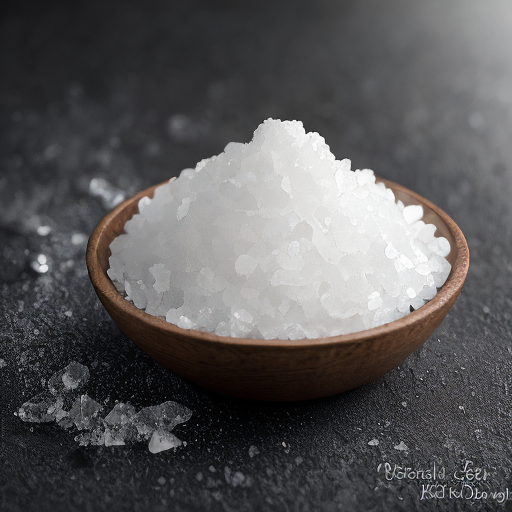
Sea salt
Sea salt, extracted from ocean waters by evaporation, was one of the most precious goods of antiquity, used both as food and as currency. In ancient Rome, soldiers were paid with salt, which is the origin of the word 'salary'. Salt roads connected entire civilizations, and in the Middle Ages, salt was so valuable it was called 'white gold'.
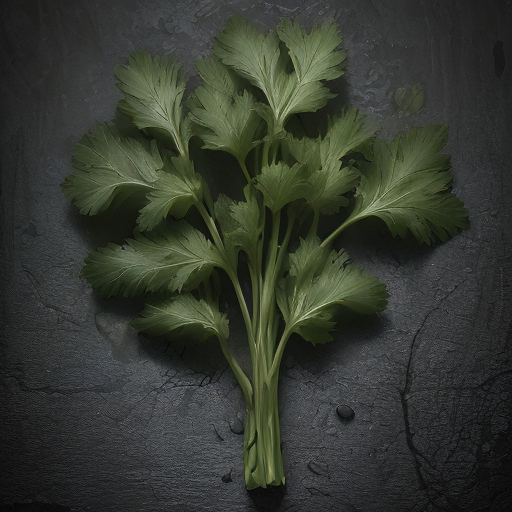
Parsley
In Greek mythology, parsley was associated with death and rebirth, planted on graves to symbolize the cycle of life. Romans used it generously in cooking and as a remedy for hangovers.
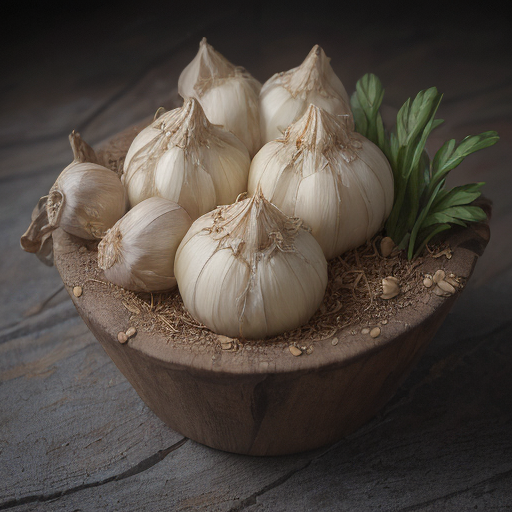
Garlic
Native to Central Asia, garlic was already known in ancient Egypt, where it was given to slaves to boost their strength. In ancient Greece, athletes consumed it before competitions, and in Rome, legionaries considered it essential for courage. During the Middle Ages, it was used to ward off vampires and the plague.
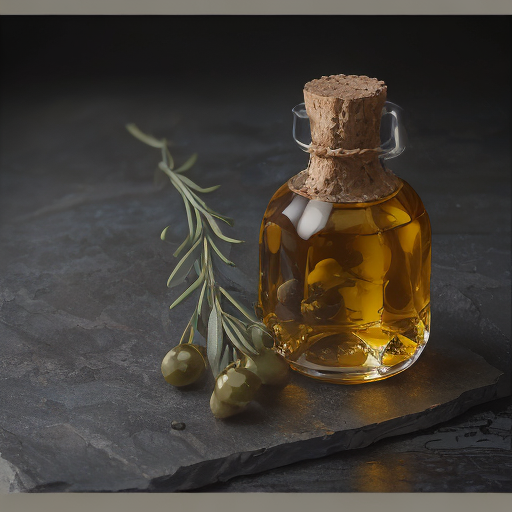
Olive oil
Originating in the Mediterranean basin, olive oil was already produced in ancient Crete 5,000 years ago. In ancient Greece, it was considered a gift from Athena and used in lamps, cosmetics, and religious ceremonies. The Romans spread it throughout the empire, and in the Middle Ages, monasteries preserved the tradition of its production.
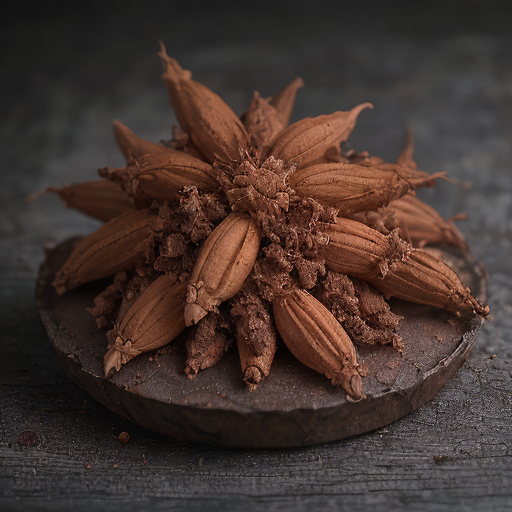
Cloves
Cloves, the dried buds of the exotic Syzygium aromaticum tree, were one of the most prized spices of the ancient world, often called 'aromatic gold'. In the Middle Ages, Venetian merchants controlled the clove trade, bringing them from the Maluku Islands, the only place they grew, and selling them at exorbitant prices in Europe.
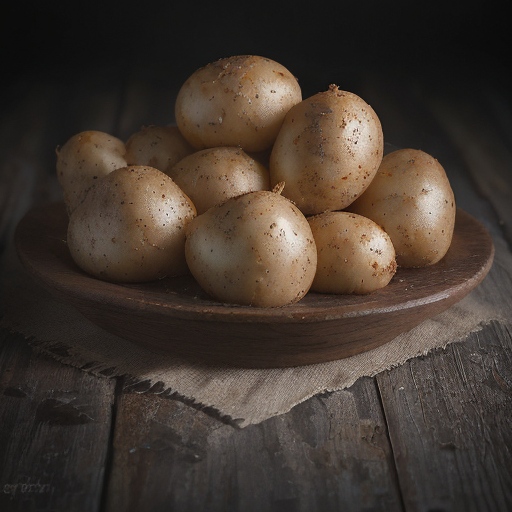
Potato
Although today it seems indispensable on the table, the potato was long viewed with suspicion in Europe. Arriving from the Andes in the 16th century, it was considered a diabolical plant, even poisonous, due to its toxic leaves and fruits. It wasn't until the 18th century, thanks to promoters like Antoine-Augustin Parmentier, that the potato became a staple food, saving Europe from famine.
You may also like
 Chicken
Air Fryer Caesar Salad with Chicken – Quick and Crispy Recipe
 Chicken
Crispy Air Fryer Chicken Breast
 Chicken
Air Fryer Chicken Breast – Quick 17-Minute Recipe
 Chicken
Crispy Orange Chicken in Air Fryer
 Chicken
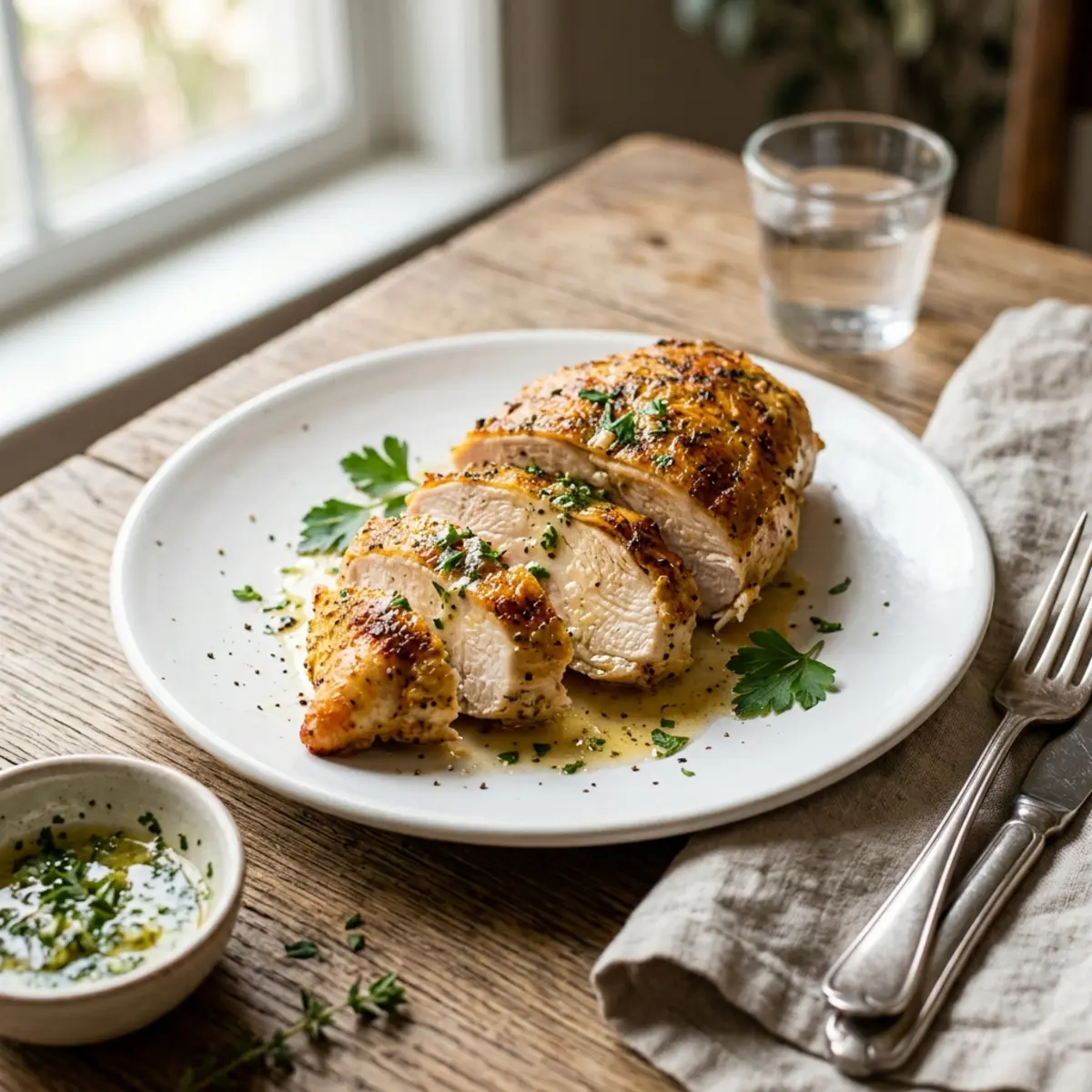
Air Fryer Chicken Breast: Juicy and Buttery in 20 Minutes
 Chicken