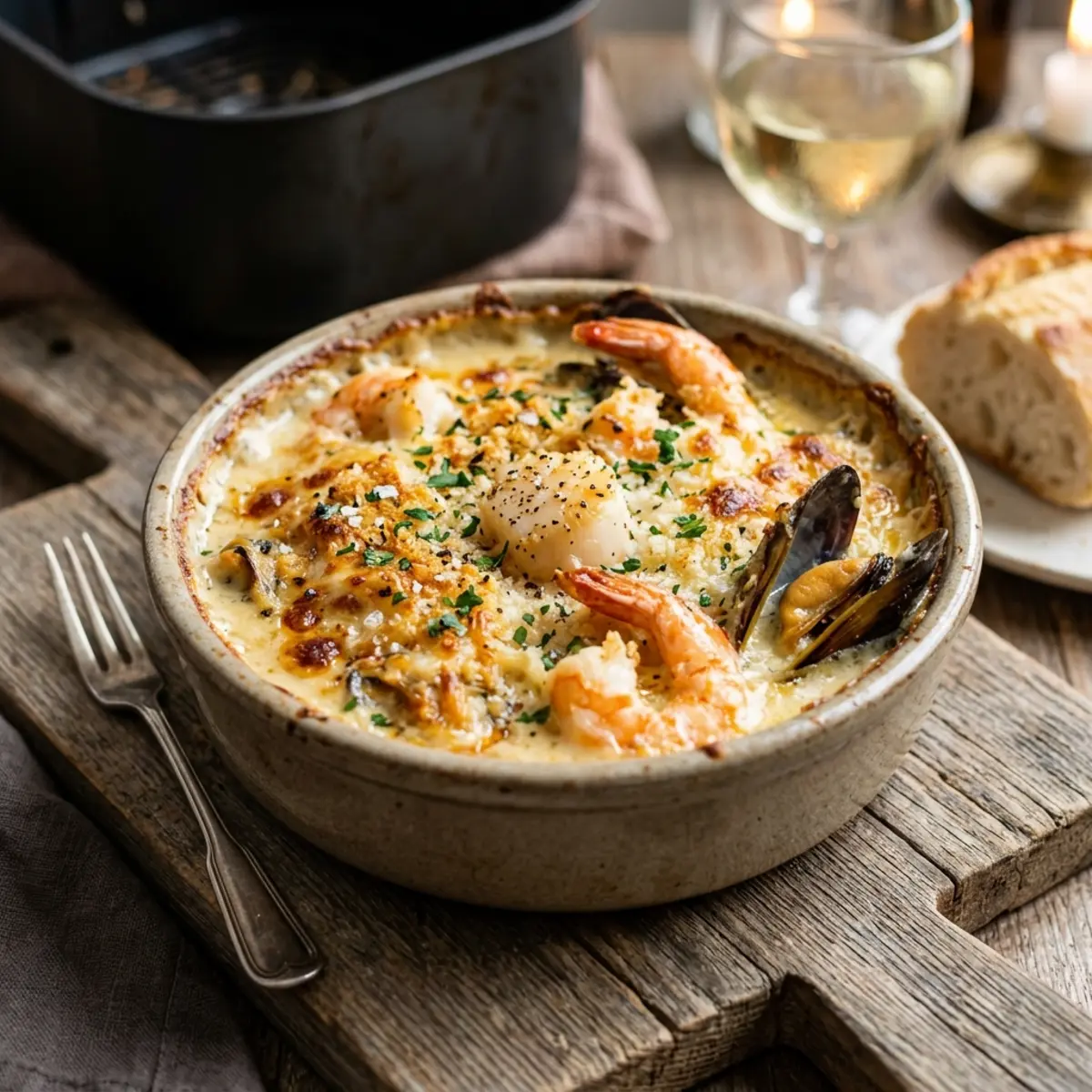
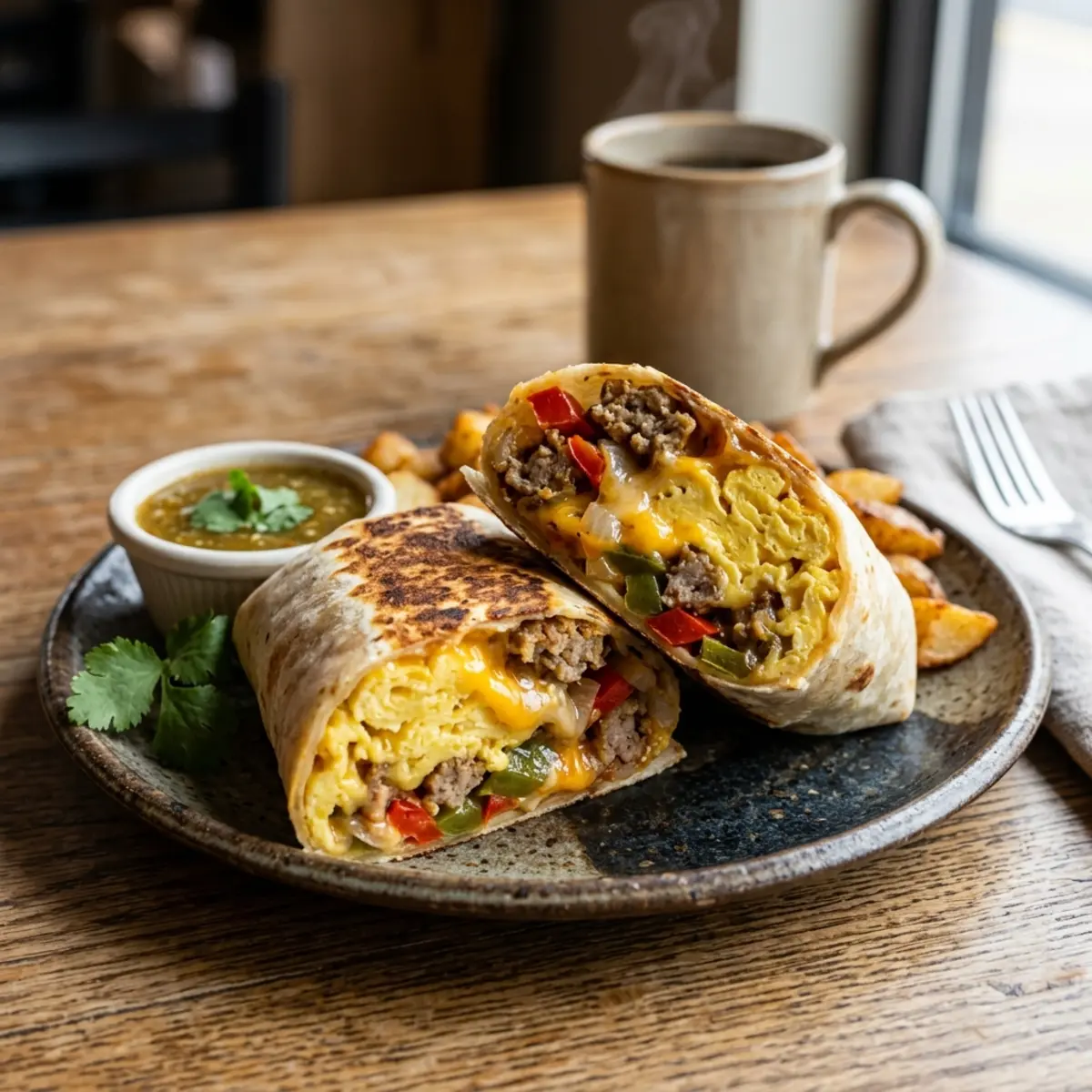
Crispy Breakfast Burritos in Air Fryer
Crispy burritos with eggs, sausage, and cheese, quickly cooked in an air fryer.
Steps
- 01
In a bowl, whisk together eggs, milk, salt, pepper, and onion powder until well combined. Heat butter in a non-stick skillet over medium heat, then pour in the egg mixture. Gently stir with a spatula, cooking until the eggs are set but still soft – do not overcook. Set aside.
- 02
In the same skillet, cook the crumbled sausage (or diced bacon) over medium-high heat, breaking it up as it cooks, until browned and no longer pink. Drain excess fat.
- 03
To assemble each burrito: place a tortilla on a flat surface, spoon about 1/4 cup of scrambled eggs in the center, top with 2 tablespoons of cooked sausage and 2 tablespoons of shredded cheese. Fold in the sides and roll tightly from bottom to top to form a burrito. Secure with a toothpick if needed.
- 04
Preheat the air fryer to 380°F (193°C). Place the burritos in the air fryer basket, seam side up, in a single layer, and lightly spray with cooking oil.
- 05
Air fry for 4 minutes, until the tortillas are golden and crispy. Serve warm with salsa, sour cream, or fresh fruit.
Recipe story
The breakfast burrito has its origins in Tex-Mex cuisine from the southwestern United States, popularized in the 1950s in California restaurants. The combination of eggs, sausage, and cheese wrapped in a tortilla was created to provide a hearty and portable breakfast. Over time, the recipe spread across North America, becoming a classic brunch dish. The air fryer version adds a crispy texture while keeping the ingredients fresh.
Ingredient Secrets
Discover the culinary secrets and flavor history of key ingredients in this dish.
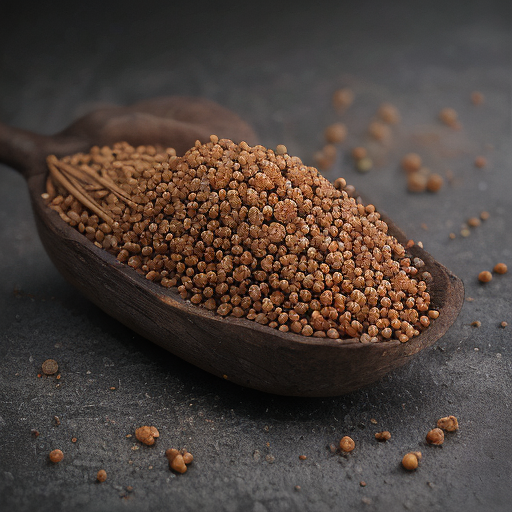
Black pepper
Known as 'black gold' in antiquity, pepper was so valuable that it served as currency and tribute. In the Middle Ages, Venetian merchants controlled the pepper trade, and individual peppercorns were often counted. Legend has it that when Alaric, king of the Visigoths, demanded tribute from Rome, he included 3,000 pounds of pepper.
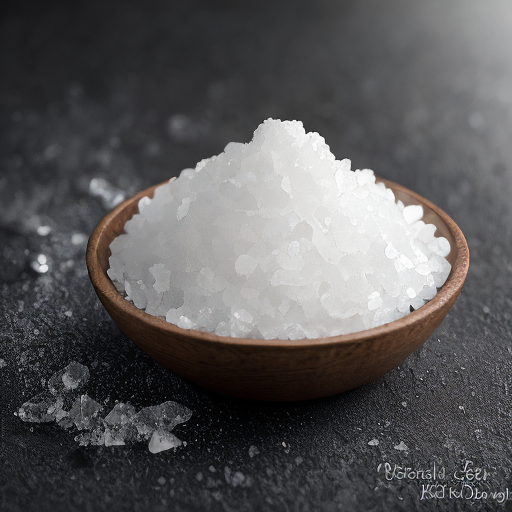
Sea salt
Sea salt, extracted from ocean waters by evaporation, was one of the most precious goods of antiquity, used both as food and as currency. In ancient Rome, soldiers were paid with salt, which is the origin of the word 'salary'. Salt roads connected entire civilizations, and in the Middle Ages, salt was so valuable it was called 'white gold'.
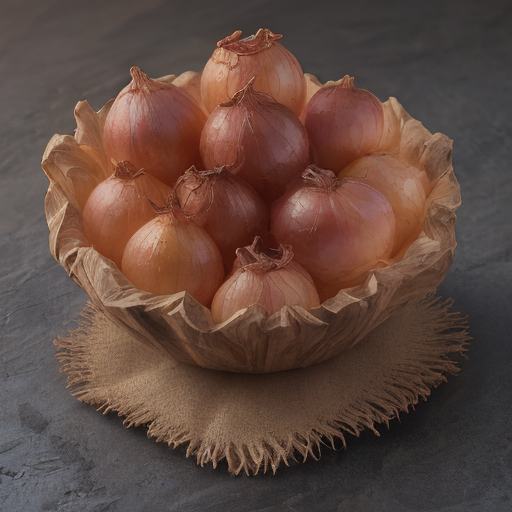
Onion
Probably originating in Central or West Asia, onions were cultivated in ancient Egypt, where they were considered a symbol of eternity and placed in tombs. In ancient Greece, athletes ate them to balance their blood, and in Rome, they were a staple food for soldiers. During the Middle Ages, onions were believed to protect against arrows and the plague.